
Dementia
Dementia isn’t just “forgetting” — it’s a progressive decline in memory, thinking, and daily function, often rooted in brain cell damage. Ayurveda calls it Smriti Bhramsha (memory disturbance), linked to vitiated Vata dosha, toxin (Ama) buildup, and weakened Majja Dhatu (nervous tissue).

Understanding Dementia: A Comprehensive Guide to Modern Clinical Insights & Holistic Ayurvedic Care
Dementia is not a normal part of aging. It is a general term for a decline in cognitive ability severe enough to interfere with an individual’s daily life, autonomy, and independence.
At Ayulife Healthcare Hospital in Gurgaon, we look at dementia through a dual lens: understanding the precise modern clinical advancements alongside the deep-rooted healing wisdom of traditional Ayurveda.
Part 1: The Clinical Reality of Dementia
Core Definition & Causes
On a cellular level, dementia is driven by progressive neuronal death and synaptic failure (the breakdown of vital communication networks between brain cells). When these nerve cells lose their connections, the brain can no longer process information effectively.
How Dementia is Diagnosed: The 6 Core Symptoms
In clinical settings, a definitive diagnosis of dementia requires a patient to exhibit a significant decline in two or more of the following core cognitive areas:
Memory Decline: Pronounced challenges with short-term or long-term recall.
Communication & Language (Aphasia): Persistent difficulties with word-finding or understanding speech.
Focus & Attention: A marked, continuous inability to concentrate or stick to a single task.
Reasoning & Judgment: Severe impairment of Executive Functioning—the mental capability to plan, make sound decisions, and solve basic problems.
Visual Perception (Agnosia): The inability to correctly recognize, map, and interpret familiar objects, faces, or physical surfaces.
Hallucinations: Experiencing false sensory perceptions (seeing or hearing things that are not present), which is particularly prevalent in certain sub-types.
The Pathological Mechanisms & Major Subtypes
While the symptoms of cognitive decline often overlap, the specific underlying cellular damage determines the exact type of dementia a patient develops.
| Pathology Mechanism | How It Damages the Brain | Major Clinical Subtype |
|---|---|---|
Protein Abnormalities | Misfolded proteins clump into toxic aggregates, choking out healthy neurons. | Alzheimer's Disease (Beta-amyloid & Tau) Lewy Body Dementia (Alpha-synuclein) |
Vascular Damage | Impaired blood flow from microscopic strokes or narrowed vessels starves brain cells of oxygen. | Vascular Dementia |
Atrophy | Progressive, localized wasting away of brain tissue. | Frontotemporal Dementia (FTD) |
Chronic Inflammation | Overactive immune responses speed up neural destruction. | Co-exists with most advanced dementias. |
Note on Mixed Dementia: It is highly common in older individuals to suffer from Mixed Dementia, a condition where multiple brain pathologies (most frequently Alzheimer's and Vascular damage) occur simultaneously.
The 5 Stages of Progression
Clinical studies show that dementia is a long-term condition that silently alters the brain long before symptoms surface.
Stage 1: Pre-Clinical (Up to 20 Years): Pathological changes (like protein accumulation) begin silently in the brain without showing any visible symptoms.
Stage 2: Mild Cognitive Impairment (MCI): Minor changes in memory or thinking are noticeable to loved ones but do not yet fully disrupt independent living.
Stage 3: Mild Dementia: Cognitive decline begins to actively interfere with complex daily tasks (e.g., managing finances, driving, navigating familiar routes).
Stage 4: Moderate Dementia: The condition begins to impact basic daily tasks, making it difficult to cook, remember personal history, or manage personal hygiene. Behavioral changes often emerge.
Stage 5: Severe Dementia: The final stage requires total dependency on caregivers. Verbal communication becomes highly limited, and physical functions significantly decline.
Part 2: The Ayurvedic Perspective — Smriti Bhramsha
In Ayurvedic texts, dementia is understood as Smriti Bhramsha—a profound disturbance of memory, intellect (Buddhi), and mental retention (Dhriti).
This condition arises when an aggravated Vata Dosha (specifically Prana Vata, which governs the nervous system) dries up the subtle channels of the mind and depletes the Majja Dhatu (nervous tissue). Concurrently, accumulated metabolic toxins (Ama) cloud the mental channels (Manovaha Srotas), resulting in cognitive fog, memory lapses, and behavioral changes.
Why Panchakarma is Our Core Intervention at Ayulife
Traditional supplements alone cannot pierce through deep cellular blockages. At Ayulife Healthcare Hospital, Panchakarma serves as a comprehensive biological reset designed to cleanse, pacify, and systematically rebuild the brain's environment.
1. Cleansing the Mental Channels (Srotoshodhana)
Before nourishment can be introduced, physical and subtle blockages must be cleared. Our protocols begin with deep internal and external lubrication (Snehana) and therapeutic sweating (Swedana) to loosen and liquefy accumulated Ama.
The cornerstone of our Vata-pacifying treatment is medicated Basti (enema therapy). Because the colon is the primary seat of Vata Dosha, balancing it at the root helps restore the unhindered flow of neural intelligence, gently lifting mental fog.
2. Direct Rejuvenation of the Brain and Head
To target the nervous system directly, we utilize specialized therapies that work from the upper channels down:
Nasya: The administration of potent, medicated herbal oils through the nasal passages. This acts as a direct pathway to clear accumulated doshas from the head.
Shirodhara: A continuous, rhythmic stream of warm, herbalized oil poured over the forehead. This therapy profoundly calms Prana Vata, soothes the nervous system, and supports Tarpaka Kapha (the sub-dosha responsible for nourishing and lubricating brain cells).
3. Rebuilding with Medhya Rasayana
Once Panchakarma has thoroughly purified the body’s channels, they become highly receptive to nourishment. Our experienced Ayurvedic Doctors (Vaidyas) administer customized Medhya Rasayana—powerful, intellect-rejuvenating herbs such as Brahmi, Shankhpushpi, and Ashwagandha. Because the digestive and cellular pathways are clear, these herbs can penetrate deeply to feed the Majja Dhatu, sharpen intellect, and improve long-term memory retention.
The Ayulife Healthcare Difference in Gurgaon
Cognitive health requires a precise, empathetic, and expert touch. At Ayulife Healthcare Hospital, Gurgaon, we deliver authentic, meticulously personalized Panchakarma therapies tailored entirely to the patient’s specific stage of progression and constitution (Prakriti).
Under the close supervision of our expert Ayurvedic physicians and within our serene, healing environment, we do not simply manage symptoms—we rejuvenate the inner cellular terrain to restore comfort, dignity, and cognitive wellness.
Seeking Support for a Loved One?
Early intervention yields the most profound outcomes. Connect with our expert medical team at Ayulife Healthcare Hospital today to schedule a comprehensive clinical and Ayurvedic evaluation.
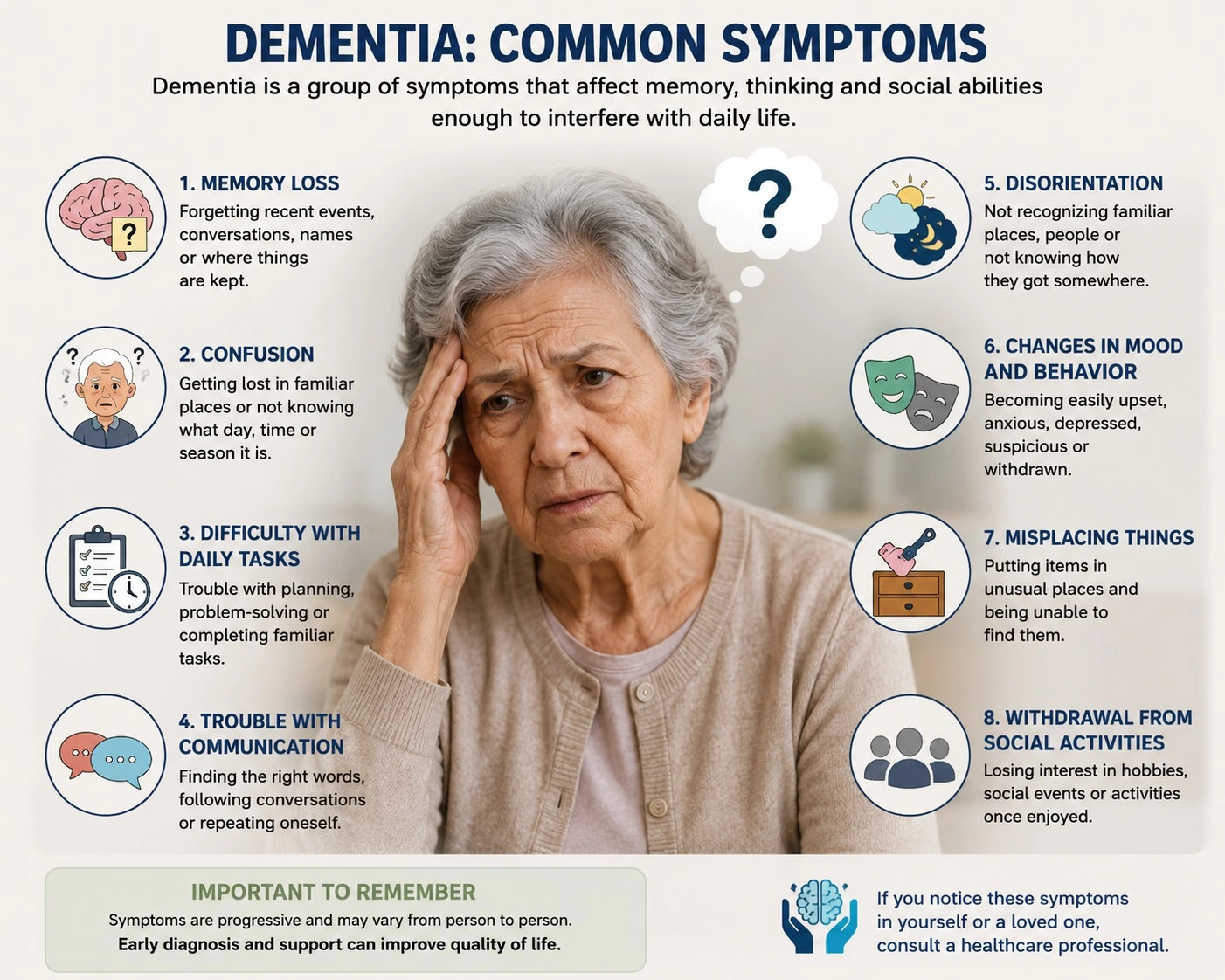 Common symptoms of dementia — early recognition helps improve quality of life.
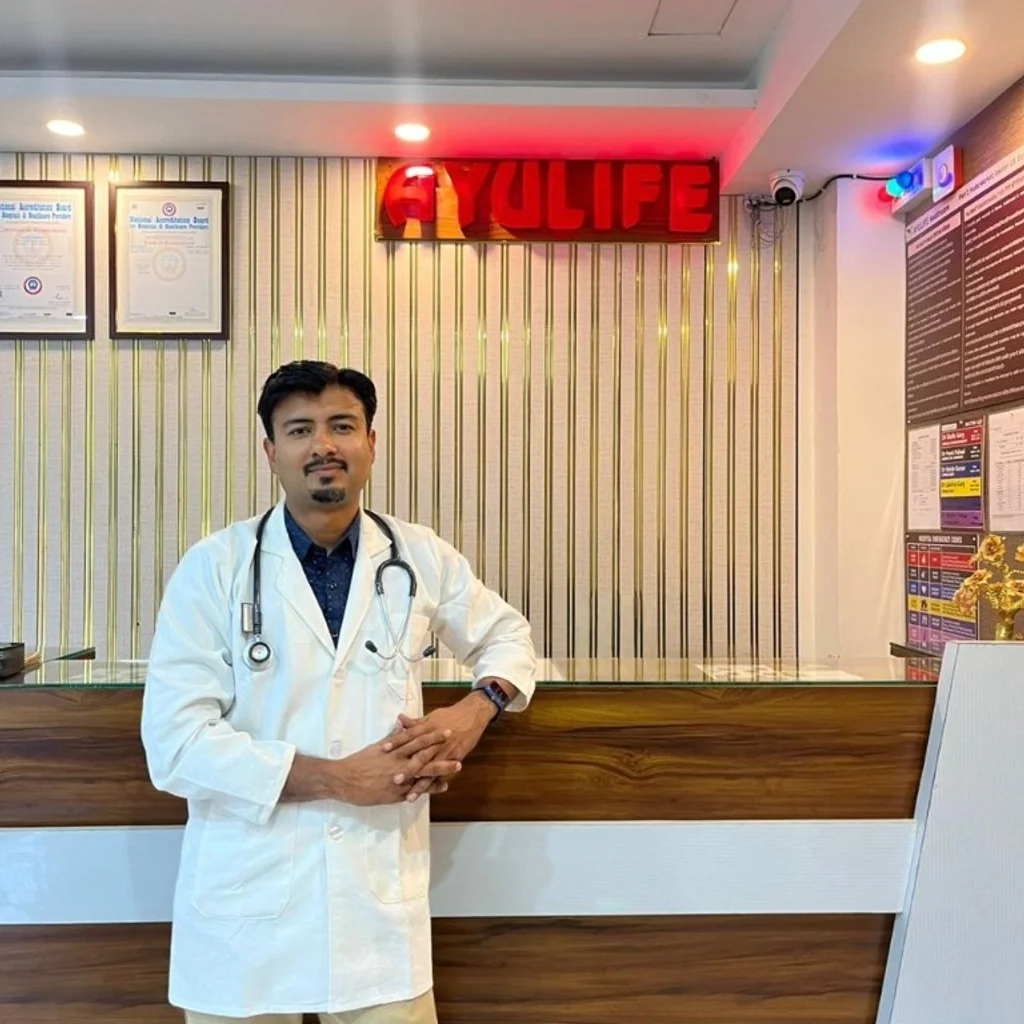 Clinical supervision by Dr. Prag Sharma.
Explore related treatments
What our clients say about us
Stories from real patients who chose Ayulife Ayurveda for chronic asthma and breathing challenges1.
Frozen Shoulder Relief at Ayulife – 70-Year-Old Patient Successfully Treated in Gurgaon
After 6 months of persistent shoulder pain and stiffness, the patient experienced significant recovery with Panchakarma therapy at Ayulife. A supervised 3-week hospital stay supported improved mobility and pain reduction.
Young Patient with Biopsy-Confirmed Psoriasis Successfully Treated at Ayulife Ayurveda
A young patient diagnosed with psoriasis via biopsy turned to Ayurvedic treatment after facing difficulties with prior medications. Worries about side effects and reduced self-confidence prompted the decision to seek care at Ayulife Ayurveda. Guided by Dr. Shallu Garg, the patient followed a customized treatment approach aimed at restoring skin health and enhancing overall well-being.
Arthritis Relief at Ayulife – Improvement After Panchakarma Therapy
A patient suffering from arthritis for six months had consulted large hospital, where relief was limited and symptoms gradually worsened, leading to steroid-based treatment. The patient then opted for Ayurvedic care at Ayulife. Following a personalized treatment plan of Panchakarma , the patient reported significant improvement.
Migraine Relief at Ayulife – Patient Testimonial
After struggling with migraines for two years and trying multiple treatments, the patient sought Ayurvedic care at Ayulife. Following a personalized therapy plan, the patient reported significant improvement, better daily comfort, and reduced reliance on medication.
Patient Stories
Real experiences from people who chose Ayulife for healing.
Neha Arora
"I was suffering from severe acidity for months. The ayurvedic treatment here completely cured it without any side effects!"
Sanjay Khanna
"My slip disc was unbearable. Kati Basti therapy gave me relief I never thought possible. Thank you Ayulife!"
Kavita Nair
"Struggled with psoriasis for years. Within 2 months here, my skin cleared up beautifully. The herbs really work!"
EXCELLENT
Based on 156 reviews

Mamta Jain
9 months ago
Had clear my pains in just 15 days.. that I was suffering more than a yr
Read moreChote Bhaiya
9 months agoAyurveda treatment to the chronic problems like constipation has been quite successful at ayuife. I have been using this clinical services of ayuljfefrom my college time as my mother still guiding me benefits of Ayurveda.
Read moreMa Ni
9 months agoDetox treatment is pretty good and healhy for stomach problems. My all issues related to bowl are gone away and constipTiona also resolved. Happy to be at ayulife and it's treatments for chronic poblem of constipation.
Read moreHemant Kumar
9 months agoBest clinc for ayurveda therpay i have come across in ncr for traetment of pains wap relates to aciatica. Was suffering from last 6 months and then so many money spent on English medicine, but at ayulife got good quality treatment and also in lesser money.
Read moreSidde Gowda
10 months agoBest clinic for panchakarma services wsp related to infertility problems, my known had lot of issues on pregnancy and the panchakarma therapies performed by Dr Shallu and tema esp uttra basti gave her good cure. And within span of 15 days got the relief on pains below stomach and pregnancy also came in 2 months.
Read moreSrikanta Sahoo
11 months agoGone for the therapy for my knee shoulders pain and I was recommended path surgery which was quality costly and time consuming treatment but then tried on ayulufe ive ayurveda for therapies and got much relief. I think my surgery is avoided now.
Read moreAman Chaurasiya 1508
12 months agoPerfect clinic for hair fall treatment the effects of leahc therapy are wonderful as apart from that dr shallu is our family doctor now as her basic grasp frdaily based ailmentss treatment by ayurveda is wonderful and effective.
Read moreAyulife Hospital Locations
Visit us at any of our clinics in Gurugram